First of all, before writing about sourdough, I should clarify my level of expertise.
I bought my sourdough starter more than two years ago in dried powder form. I revived it and have been maintaining the same starter ever since. I bake sourdough only once every two or three months. That’s it.
In this post, I’ll share how I maintain my starter and bake my sourdough. My approach is very simple.
My starter lives in the fridge most of the time. A sourdough starter is a natural culture of wild yeast and beneficial bacteria that develops through fermentation. At its most basic, all you need to make a starter is flour and water..
Reviving the starter
This is how my starter is looking after 2+ months in the fridge. The last time I fed it with flour and water, mixed it and kept it in the fridge.
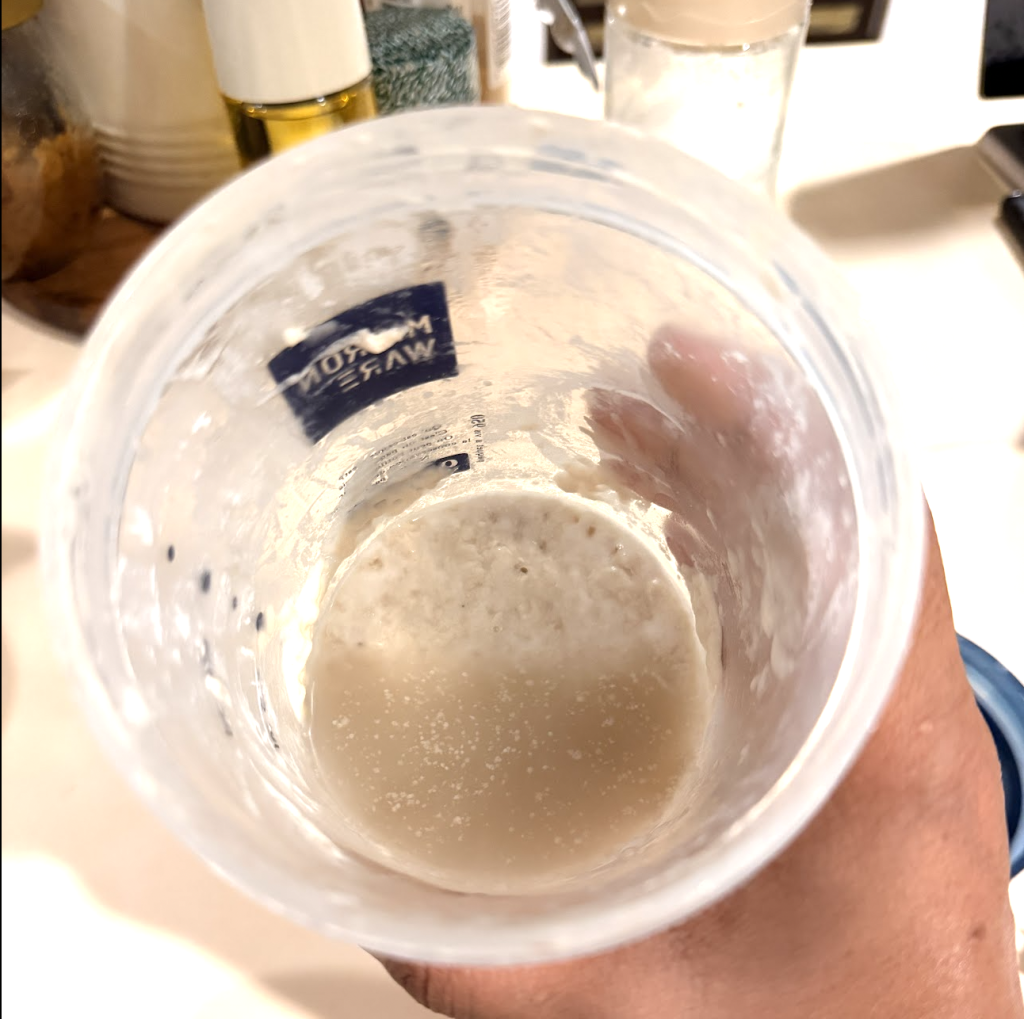
The greyish liquid is called hooch. It contains water, alcohol and acids produced by fermentation. I don’t know the function of it and it looks disgusting so I just discard it.
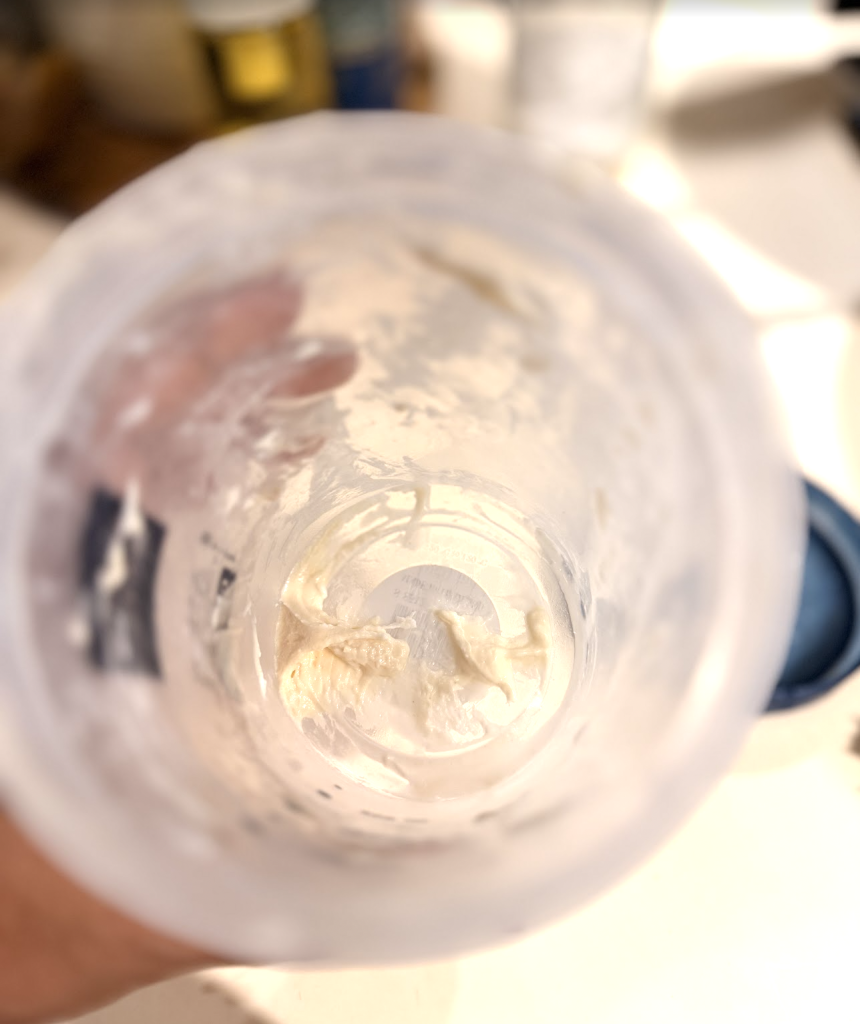
I discard most of the starter when I first take the jar out of the fridge. I leave a little behind and feed it with flour and water, usually in a 2:2:1 ratio (2 parts flour, 2 parts water, and 1 part starter). So if I have 10g of starter, I’ll feed it with 20g of flour and 20g of water.
For flour, I use bread flour with a little bit of German rye flour mixed in. Using only bread flour works perfectly fine too.
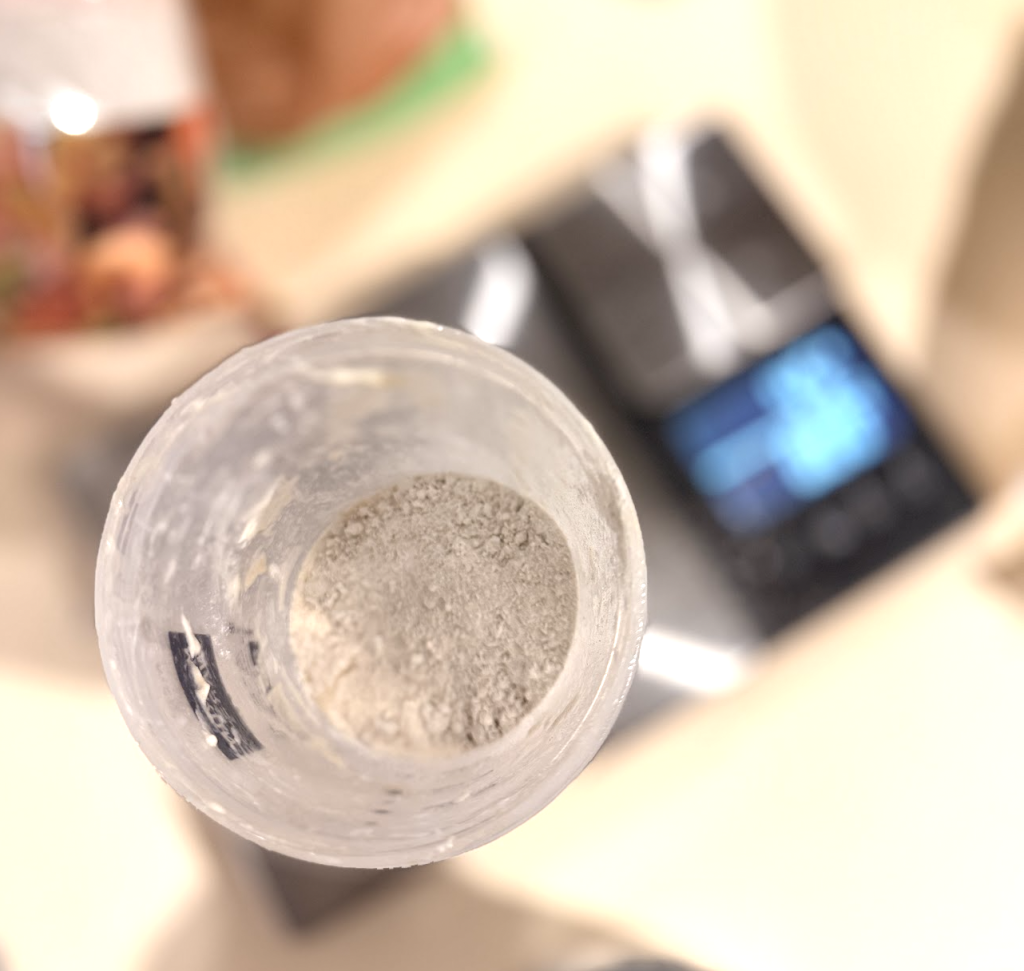
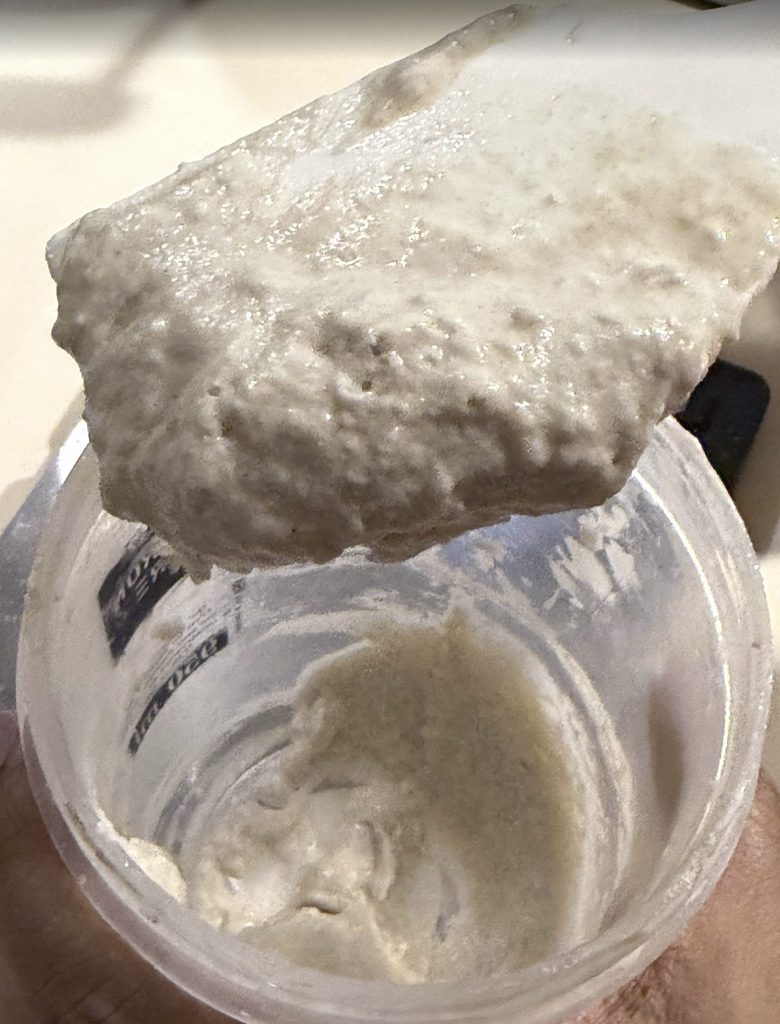
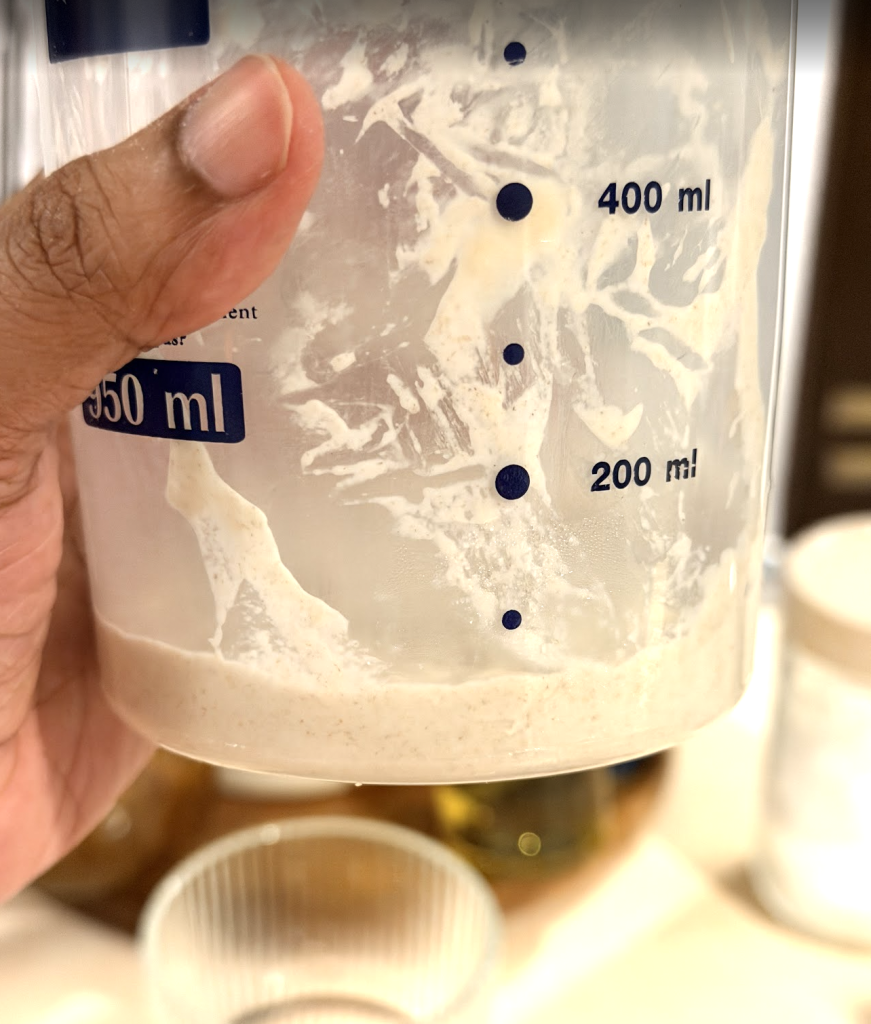
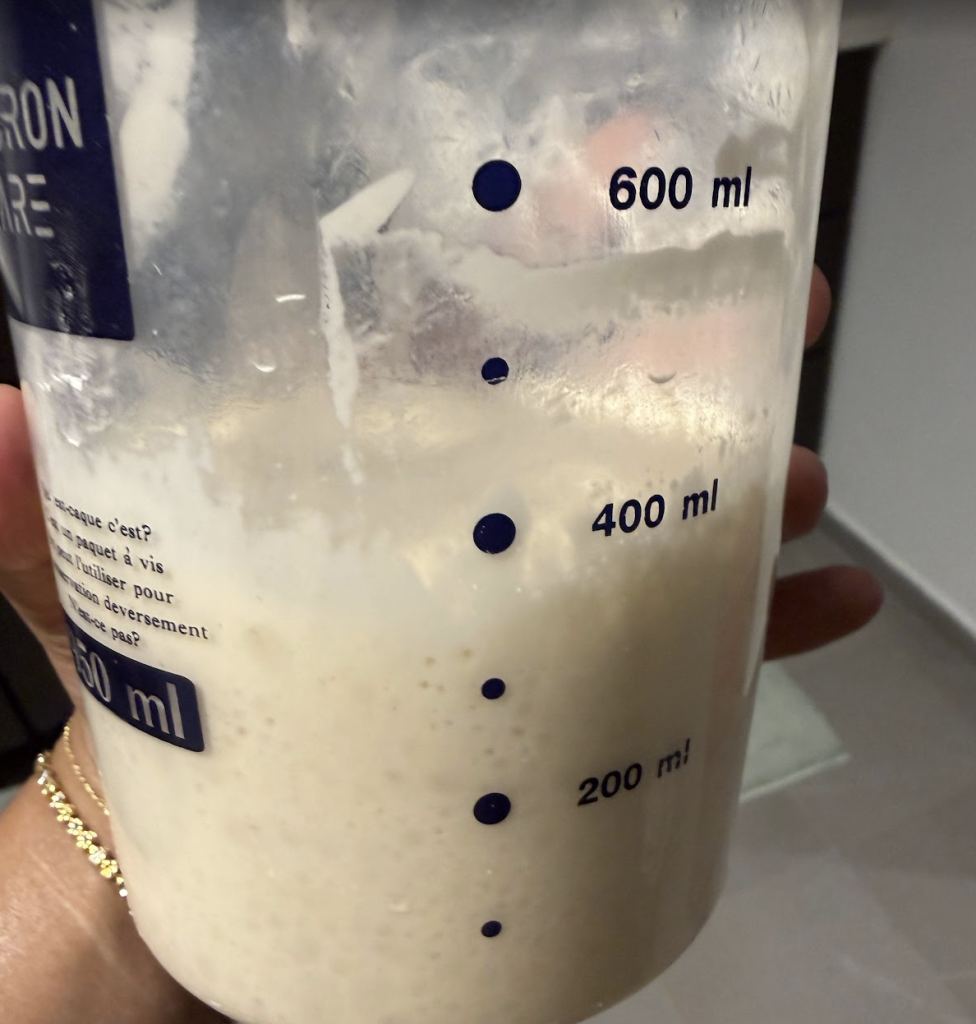
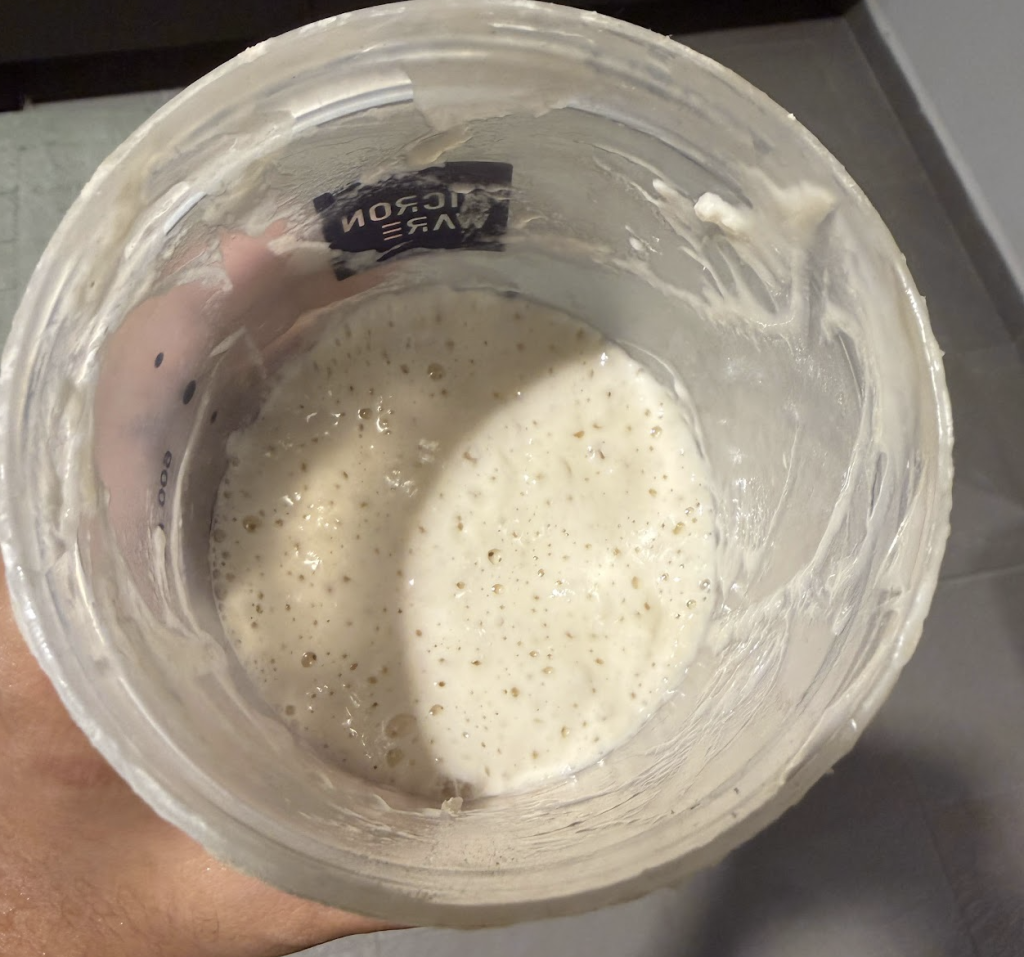
In the ratio of flour to water to starter I mentioned, the consistency of the mixture should be like the above, not to runny or shaggy. Just in between. I leave it on the counter till it rises. Mind you, I live in Singapore and the temperature is hot (31 – 34 degree celsius) and humidity is really high (80+).
Neglecting the starter
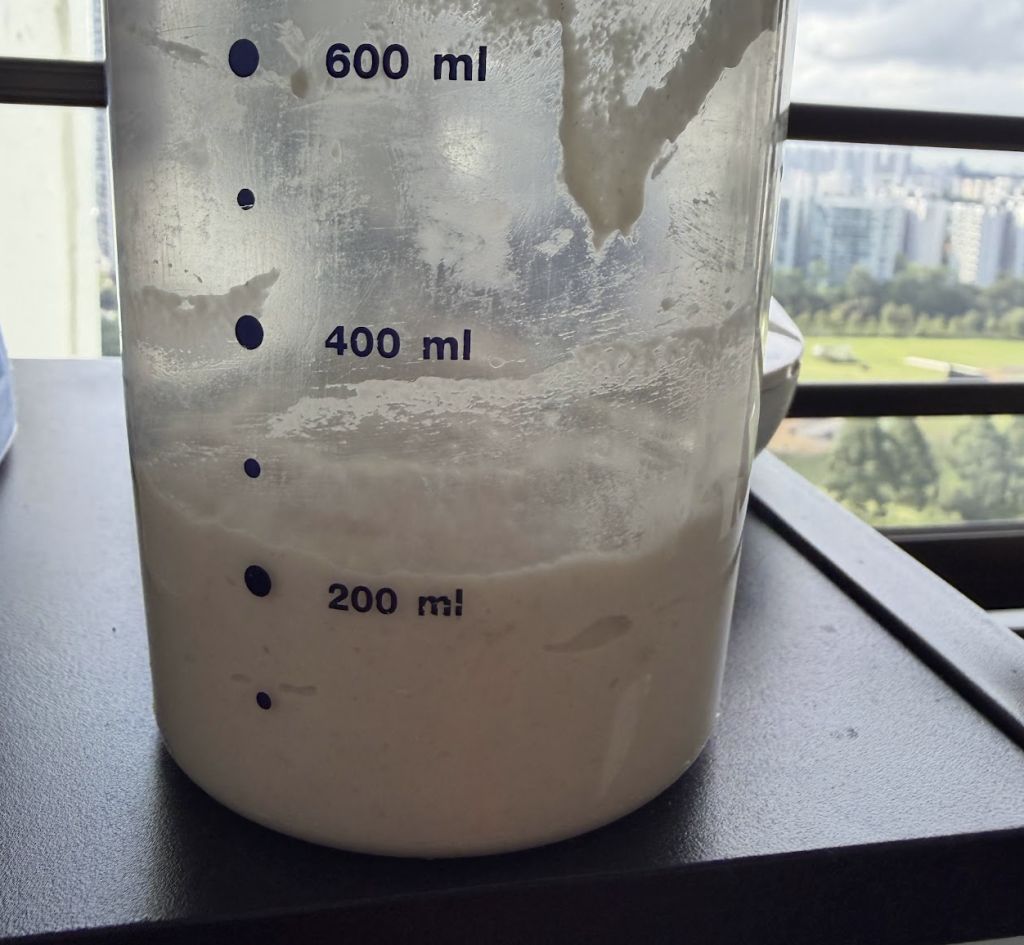
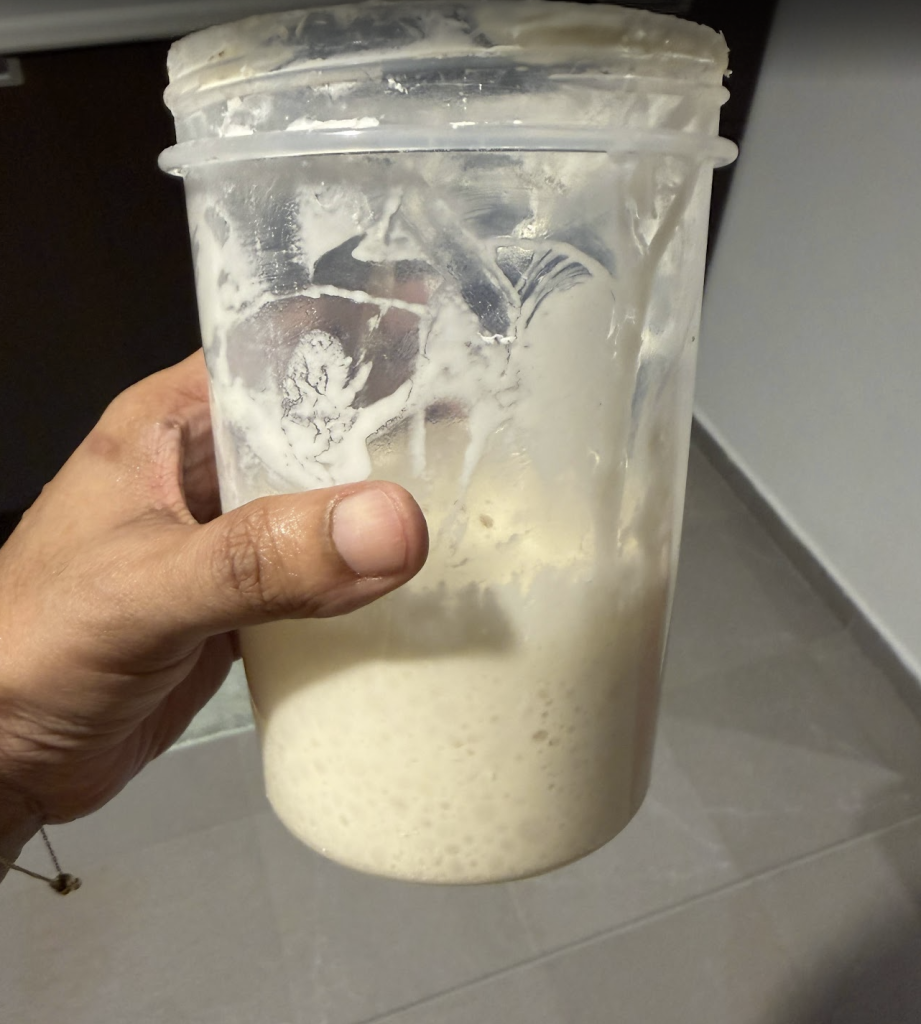
My starter did rise after 4 to 5 hours. However, I was too tired to go through the sourdough making process, so I left the starter out overnight. By the next morning, it had flattened. For the next 2 days, I did not manage to make the sourdough so I fed the starter 2 more times, once everyday that I missed making the sourdough, by discarding most of it and feeding it with the ratio 2:2:1.
The Day I made the Sourdough
This is how my starter looked like just before I started making my sourdough
The recipe is simple, I use it again and again
- 400g bread flour
- 100g rye flour
- 11g salt
- 400g water (80% hydration)
- 70g – 100g starter
I use a hydration level of 75% to 85% for my sourdough. This means that the amount of water is 75% to 85% of the total weight of the flour.
Steps to make the sourdough
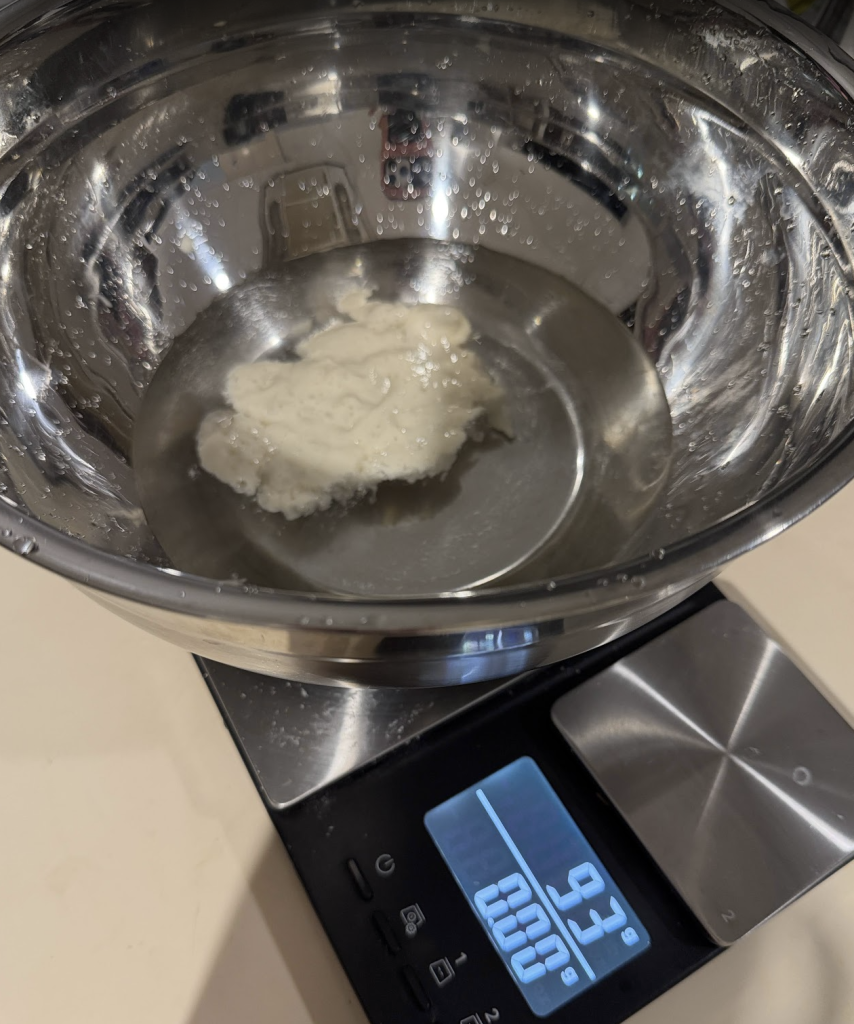
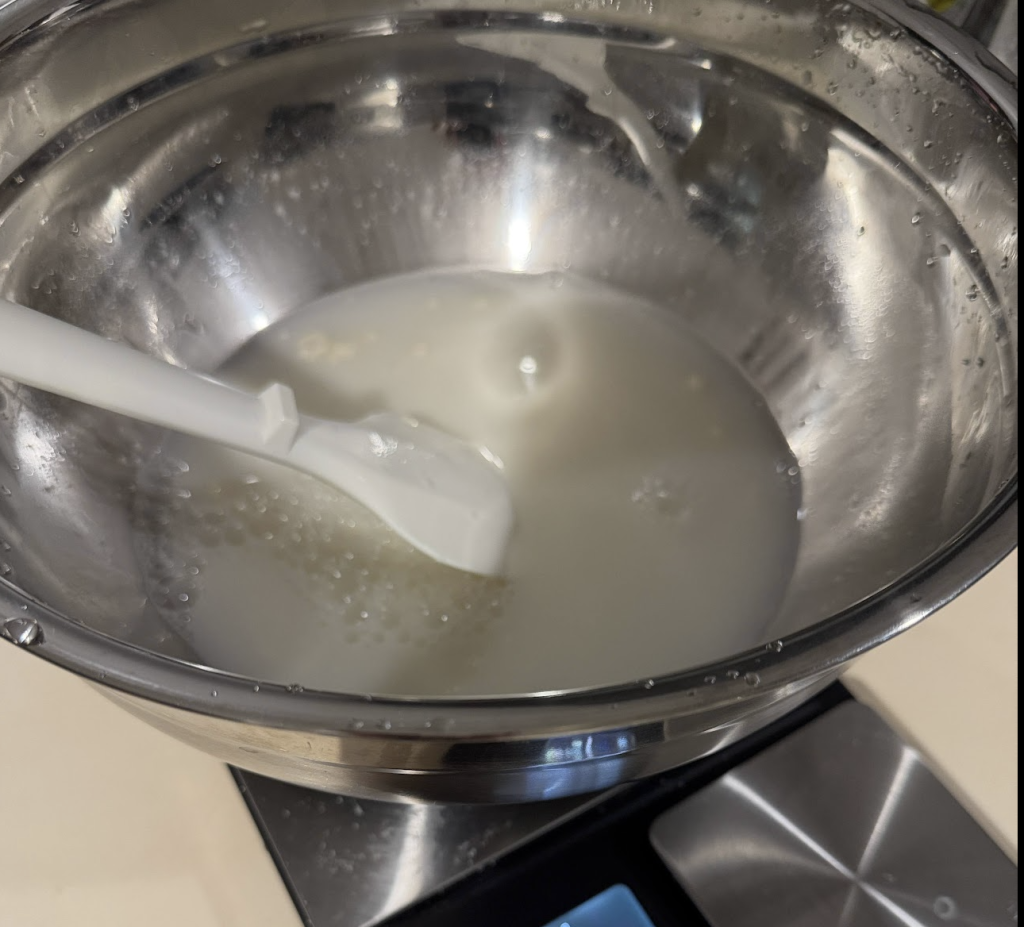
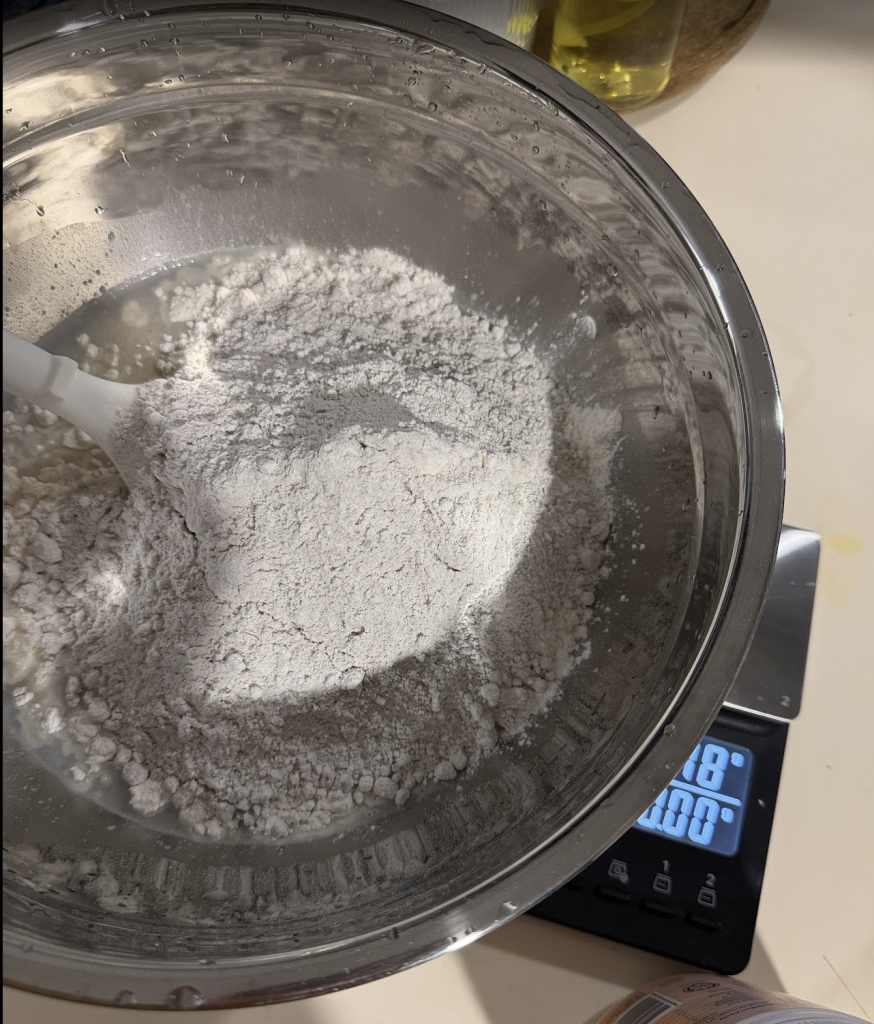
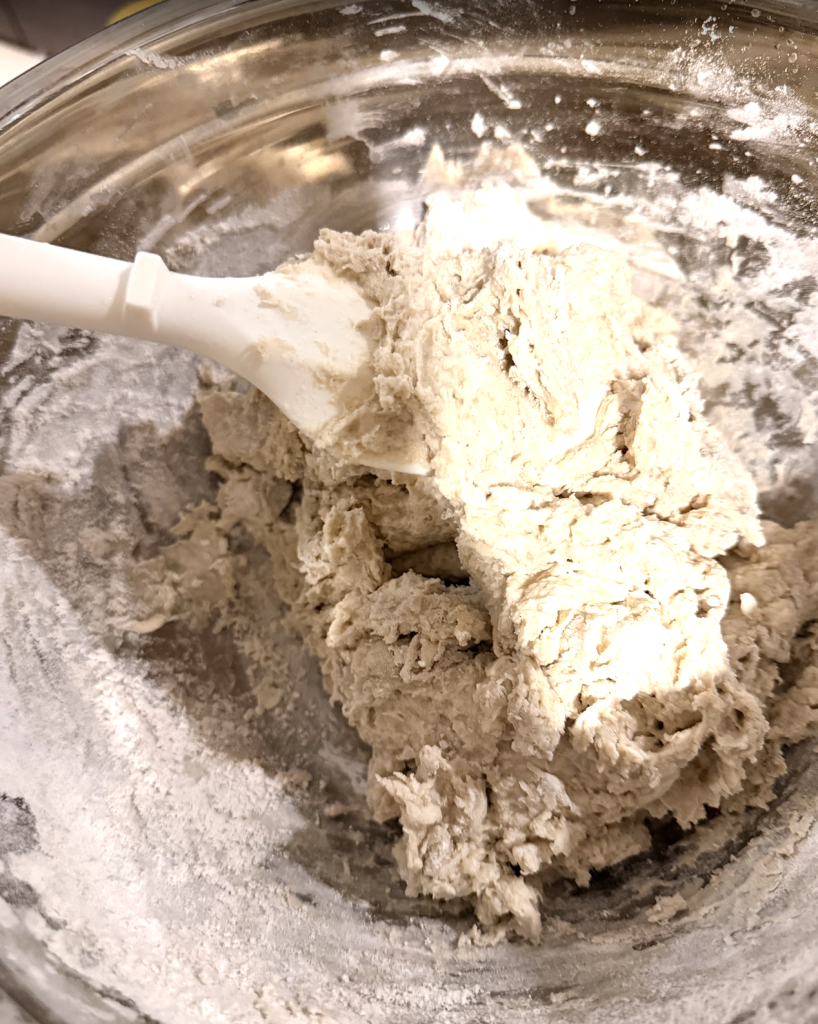
- Pour the starter into the water and mix until it becomes milky.
- Add the flour.
- Add the salt.
- Roughly mix everything with a spatula until you get a shaggy dough.
- After mixing, leave it on the counter for 30 minutes.
- Do 3–5 sets of stretch and folds at 30-minute intervals.
- Leave it to bulk ferment for 2–3 hours in Singapore’s hot and humid weather.
- Add any inclusions (I used jalapeños and cheddar for this one).
- Shape the dough and leave it in the fridge for the final proof.
This is after 8 hours, I took it out of fridge
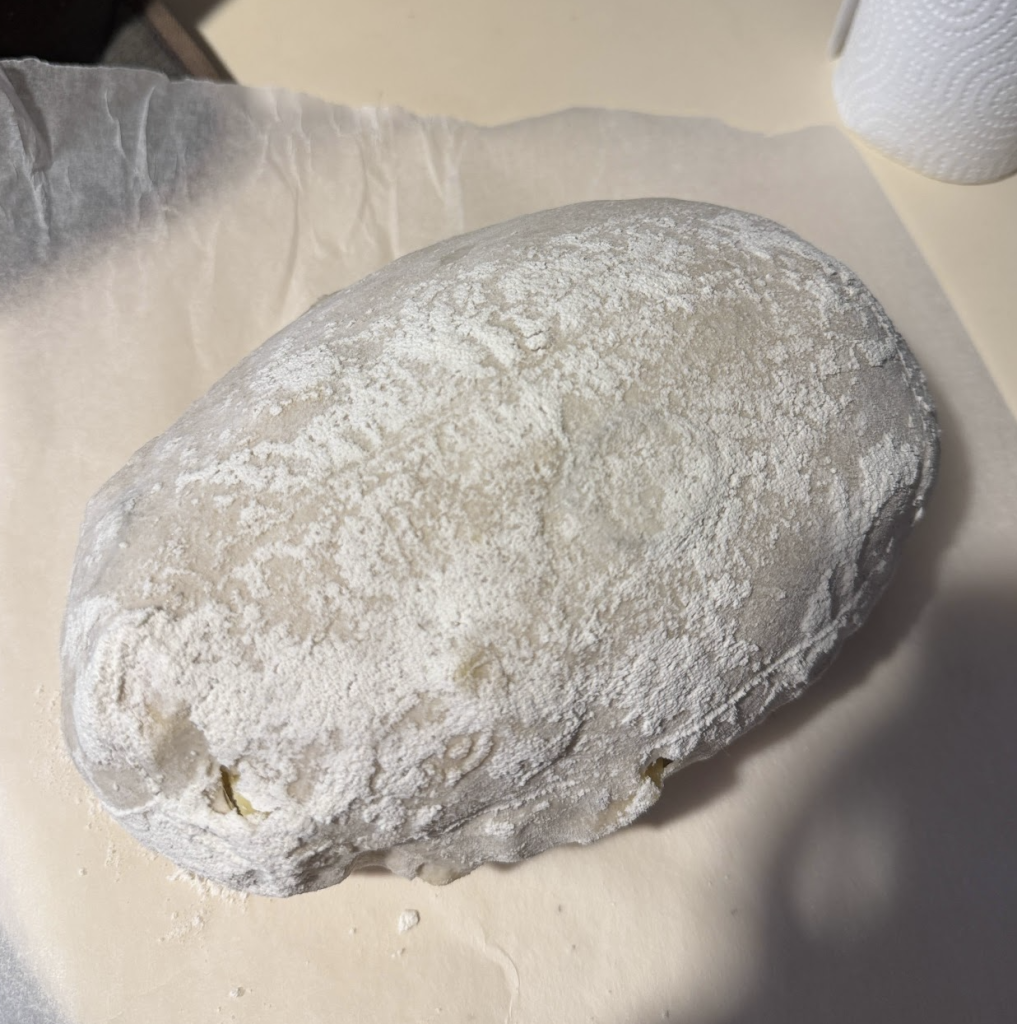
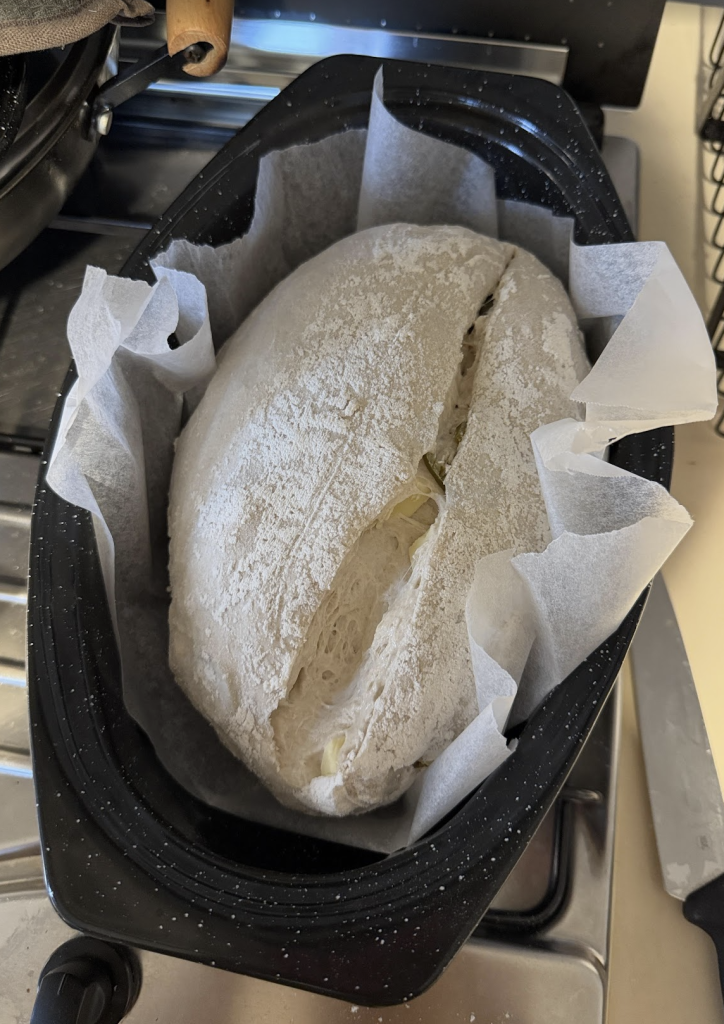
I preheated the oven at 220 degrees celcius for 20 minutes, made a slit on the dough and placed it in an enamel baking dish with a lid.
Baked with lid on for 20 minutes and lid off for 20 minutes.
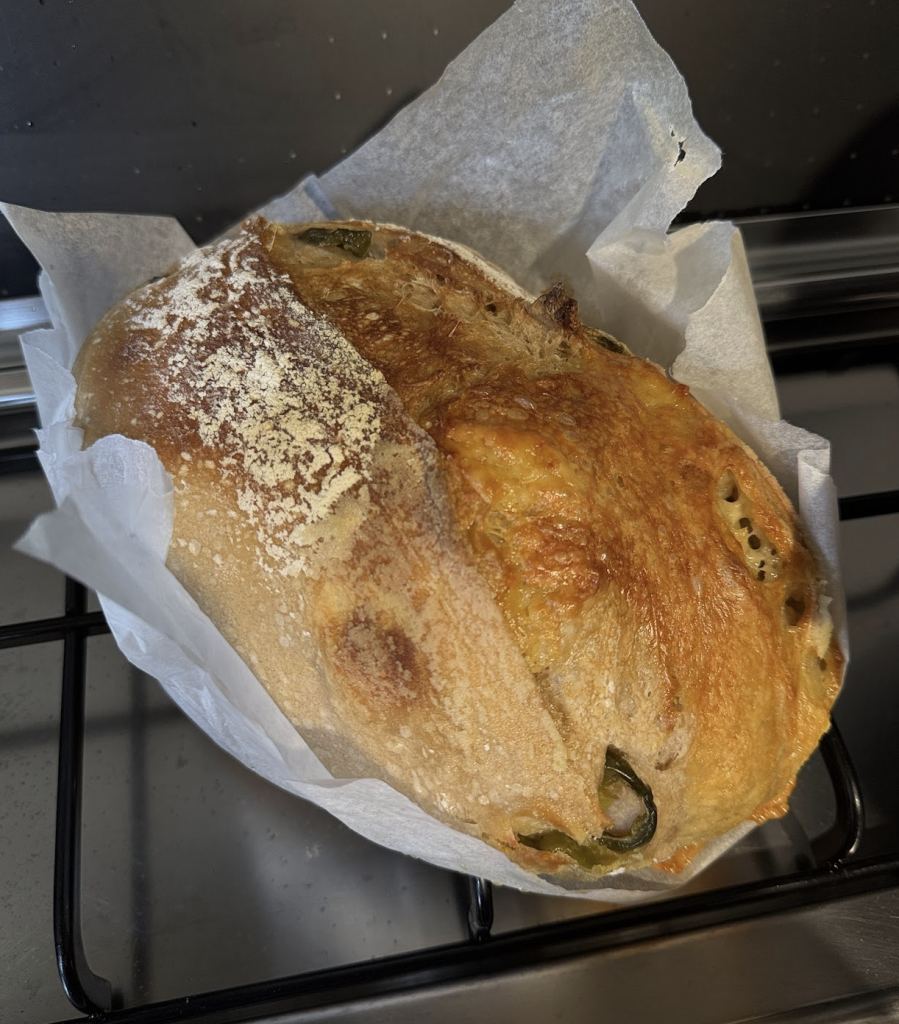
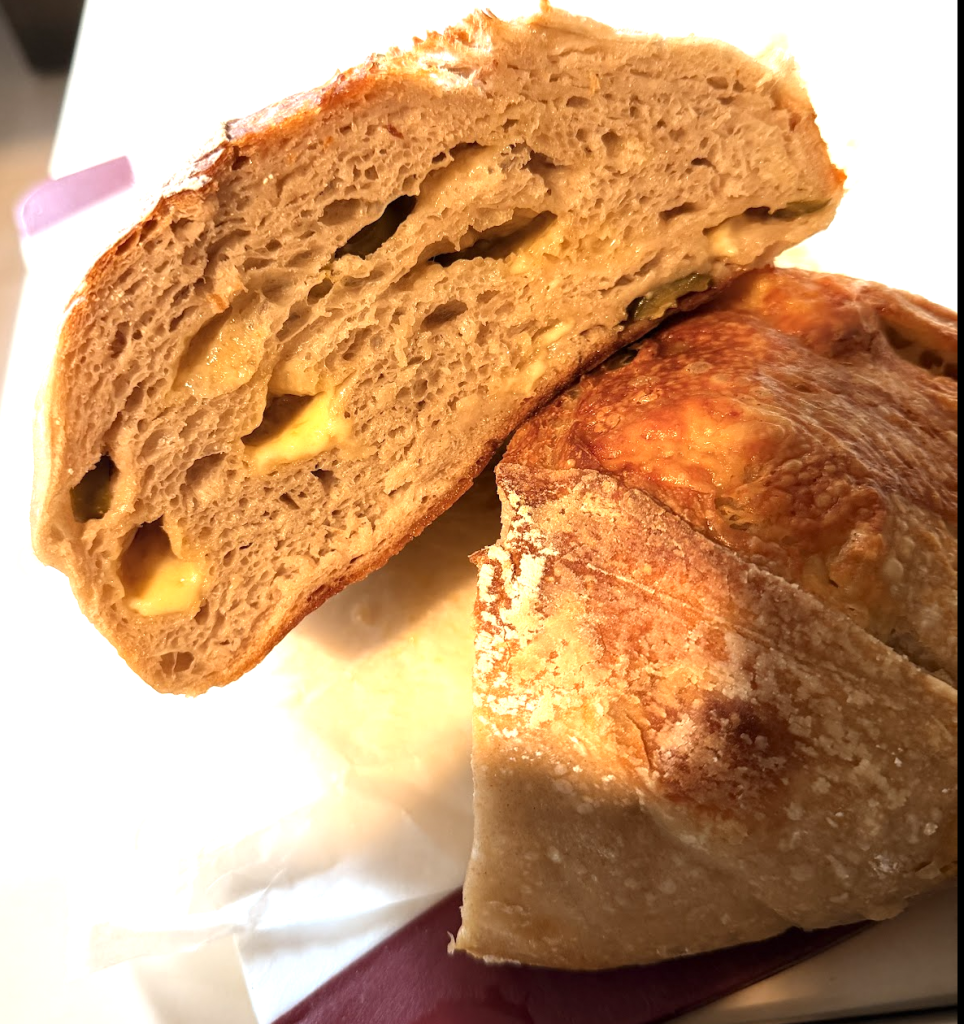
Look at my sourdough! It came out perfect!
No meticulous methodology required. You just need to keep your starter in the fridge and feed it regularly. When feeding, use equal amounts of flour and water, and make sure the amount you feed is greater than the amount of starter you have.
Whenever you’re planning to bake, take the starter out of the fridge a day in advance and give it a feed.
As for the sourdough itself, you’ll need to adjust the fermentation time based on the weather where you live. During bulk fermentation, make sure you don’t overproof the dough. For the final proof in the fridge, I usually leave it for up to a day. Any longer than that and I find the dough can become a bit too sour.
Point to be noted
Once the starter is revived, you can use it much like regular yeast. The concept is the same. The main difference, in my opinion, is that a sourdough starter takes longer to proof the dough and gives the bread a slightly sour taste (apart from its gut-friendly properties).
So thats my sourdough! If you like this article subscribe! See you in the next post 🙂
Leave a Reply